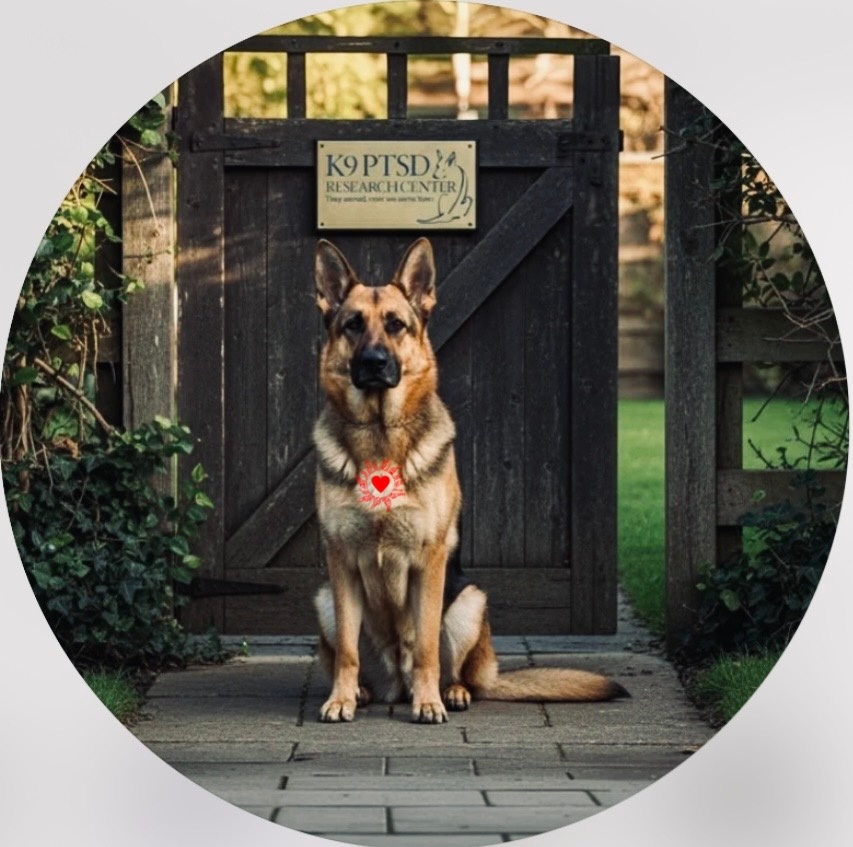
“Dogs do speak, but only to those who know how to listen” Orhan Pamuk. At the K9 PTSD Research Center in Massachusetts, working K9 and Military dogs suffering from C-PTSD (Canine Post-Traumatic Stress Disorder) “due to work related mental injuries” go to heal their minds and souls in a supportive, nurturing environment. These highly trained dogs who have given all they have, are now given what they need to recover and heal so they can become a dog again. The K9 PTSD Research Center’s mission is “deeply rooted in the guiding principle of ‘The Study of One’, a motto that reflects their unwavering commitment to understanding and supporting each K9’s unique journey towards healing.” Jim LaMonte, former K9 trainer, founder and director, kindly shared some of this time to talk about these special dogs and this compassionate center.
“Trauma can deeply affect K9s, particularly those who have served in high-stress environments like the military, law enforcement, or search-and-rescue. These brave dogs face challenges that can take a toll on their mental and physical well-being, and we are here to help them overcome these obstacles.” K9 PTSD Research Center
In 2019 Jim’s life, and the lives of these special canines, began a healing journey that no one saw coming, beginning with K9 Dakota. As a K9 police dog Dakota had served on many assignments, including during the 2013 Boston Marathon bombing. He began to display behaviors such as constant circling and loss of bodily control, eventually getting to a point where Dakota either needed to be surrendered or euthanized. A frantic call to Jim from someone who had heard about his experience training canines resulted in Dakota coming to Jim. Even with all of Jim’s K9 training experience, working with a dog that was showing signs of such trauma was not something he was familiar with, and there was no research out there in regards to C-PTSD. During this time Jim was struggling with his own mental health. He was experiencing crippling anxiety, so much so that it was difficult for him to leave his house. At one point Jim realized both he and Dakota were in some ways both in the same emotional and mental place. As he worked to understand how to help Dakota heal, he realized in doing so he was helping to heal himself. The collision of their two worlds gave him clarity. Letting go of what he thought Dakota’s healing and rehabilitation should be, Jim leaned into learning from his mistakes, and let Dakota’s behaviors and responses to different interventions guide him to what Dakota needed, and what Jim needed as well.
“We recognize that every dog, like every individual, has a distinct story, and we are dedicated to creating a tailored approach that meets their specific needs. Whether they are battling PTSD or recovering from trauma, our goal is to provide compassionate care, expert treatment, and individualized support to help every K9 find peace, purpose, and a path to a brighter future.” K9 PTSD Research Center
Prior to Dakota’s arrival, Jim had been focused on using positive reinforcement in his training with canines. He and Dr. Kathleen Morgan, Associate Professor of Psychology in the Psychology and Neuroscience Department at Wheaton College, had collaborated on studying the effectiveness of positive reinforcement with other canines Jim was training. Once Dakota arrived they continued to problem solve what strategies and reinforcements a dog who was experiencing PTSD – which can also be referred to as PTSI (Post Traumatic Stress Injury), needed in order to heal. Tufts Veterinary School of Medicine also became collaborators. There was no research and information available to help what treatment the K9s needed to heal from the mental and emotional injuries from the trauma they had experienced. Jim, along with these collaborators, are changing that.
“Our team works tirelessly to assess the needs of each dog, crafting treatment plans that address their individual struggles and goals. Using a combination of cutting-edge therapies, rehabilitation techniques, and positive behavioral training, we aim to restore balance and harmony in their lives.” K9 PTSD Research Center
There is a formal assessment prior to any K9 coming to heal and reside at the center. A detailed phone call or email assessment takes about two hours. All humans who have been a critical part of the K9’s life give information. Jim discovered what he is told, and what he sees can differ, so video of the K9 is part of the assessment. All of this happens over a span of four months. If a dog is accepted to the center they will become a permanent resident, as the dog is surrendered from their handler. Due to the work the canine was part of, the handler becomes a trigger to the dog, so no future contact is allowed. If the handler reaches out, or if it is the end of life, Jim will share that information. The first 30 days at the center is a quarantine period for decompression. Basic needs are cared for while the K9 is watched on camera 24/7. Due to the trauma the dogs are in a constant state of fear and they don’t know what to do. Their brains have flipped to a state of constant fear and confusion, causing the dog to be in a state of survival with their first reaction to be aggressive and fight. Giving the dog a time of decompression with little interaction allows time for homeostasis, and healing, to begin.
“These brave dogs face challenges that can take a toll on their mental and physical well-being, and we are here to help them overcome these obstacles. Our specialised team, comprised of volunteer experienced veterinarians, trainers, and behavioral specialists, is dedicated to providing expert evaluation, treatment plans, and emotional support to help these K9s recover and live fulfilling lives.” K9 PTSD Research Center
Jim, and all those involved, utilize a specific set of protocols with each K9. Jim is the primary caregiver and rehabber of each K9 along with trained volunteers who help in other ways. The treatment, rehabilitation, and healing of each K9 is unique and specific to each dog. Ongoing research allows them to build an arsenal of healing tools and strategies to help these dogs who are in distress come back to being a dog. Jim shared seeing them healing is powerful and emotional and his hope is to “help more K9s heal, more K9s recover, and more K9s find the peace they’ve been searching for.”
It is with honor we shine the Kindness Champion Spotlight on the pawsome K9 PTSD Research Center. Where 15 former K9 and military “four-legged heroes who served us all” are residing and healing from the mental injuries they experienced from selflessly serving their community and country. These special K9s are surrounded with love, care, and healing from a dedicated pack of people led by Jim LaMonte to help them live the remainder of their lives in the best dog way possible. We thank you for being you and bringing your awesomeness to the world.
For more information or to support K9 PTSD Research Center here is their information:
Website: https://k9ptsd.org/mission
Facebook: @K9PTSDCenter https://www.facebook.com/k9ptsdcenter/
Instagram: @k9ptsd https://www.instagram.com/k9ptsd/?hl=en
YouTube: @k9ptsdcenter https://www.youtube.com/@k9ptsdcenter